
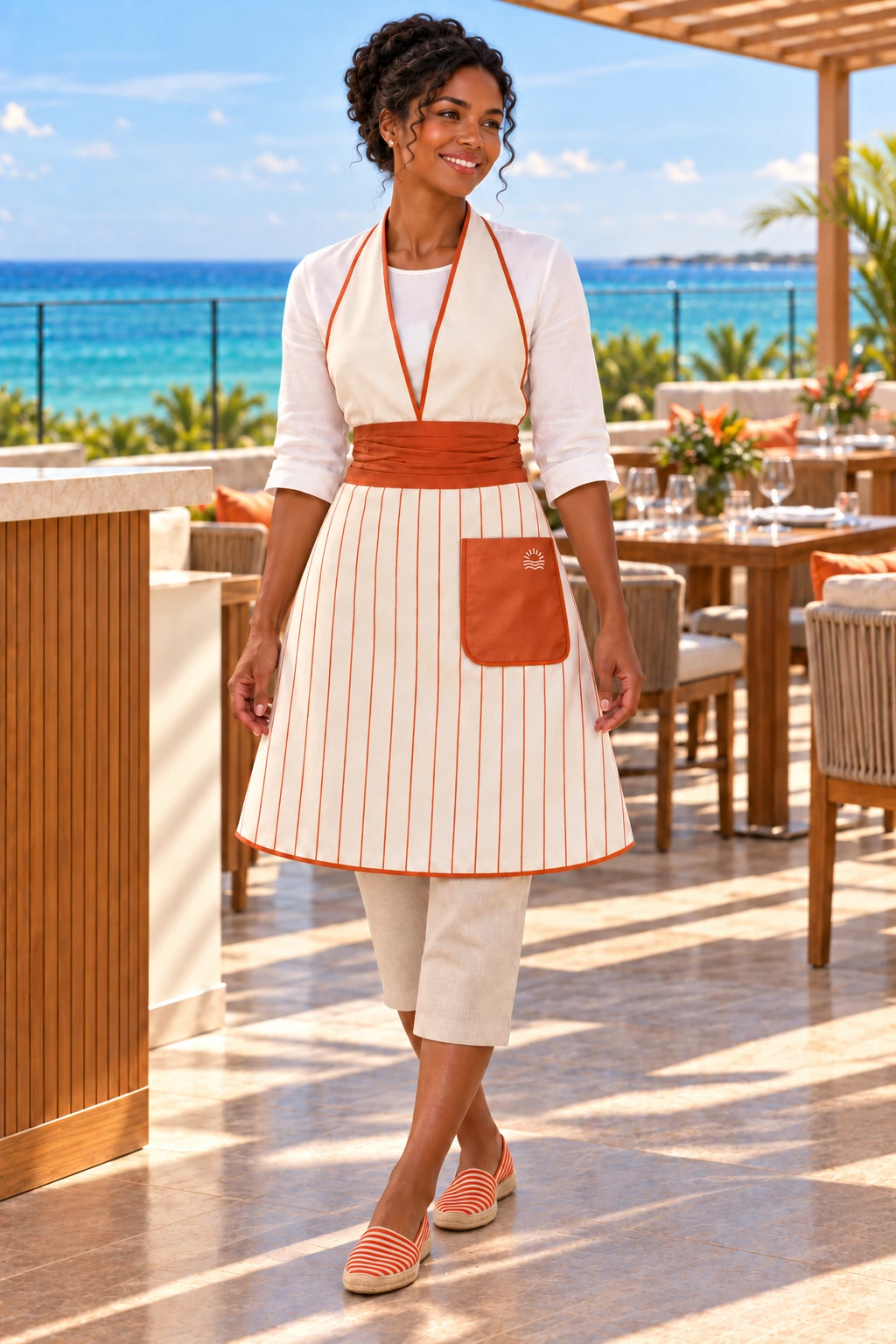

A breakfast terrace might feel bright and informal. A poolside bar can be more relaxed. An evening restaurant may call for a quieter mood.
One hotel can make room for different personalities.
Menus, textiles and uniforms can express those differences. The design question is how to give each type of space its own character while keeping a recognisable connection.
Give each space a point of view
Before choosing a colour for every napkin, ask what makes each venue worth visiting.
Is it relaxed and open to the weather? A little theatrical? A place for a quick lunch or a dinner that takes its time? The food, light and pace of service all have something to say.
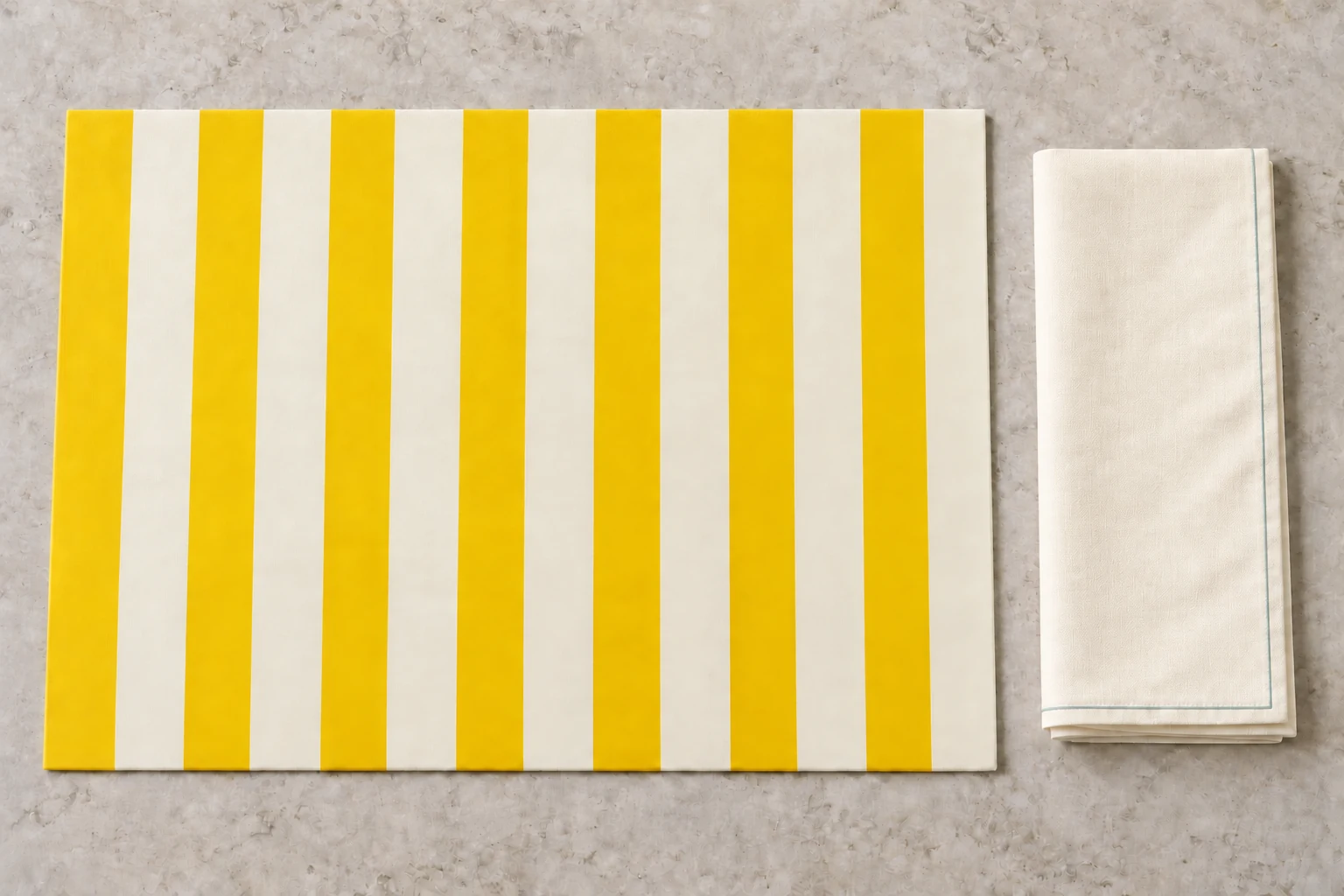
A menu cover, apron or placemat can carry those differences. One space may suit a crisp graphic edge; another may call for a softer texture. The aim is to make the objects feel at home in the room.
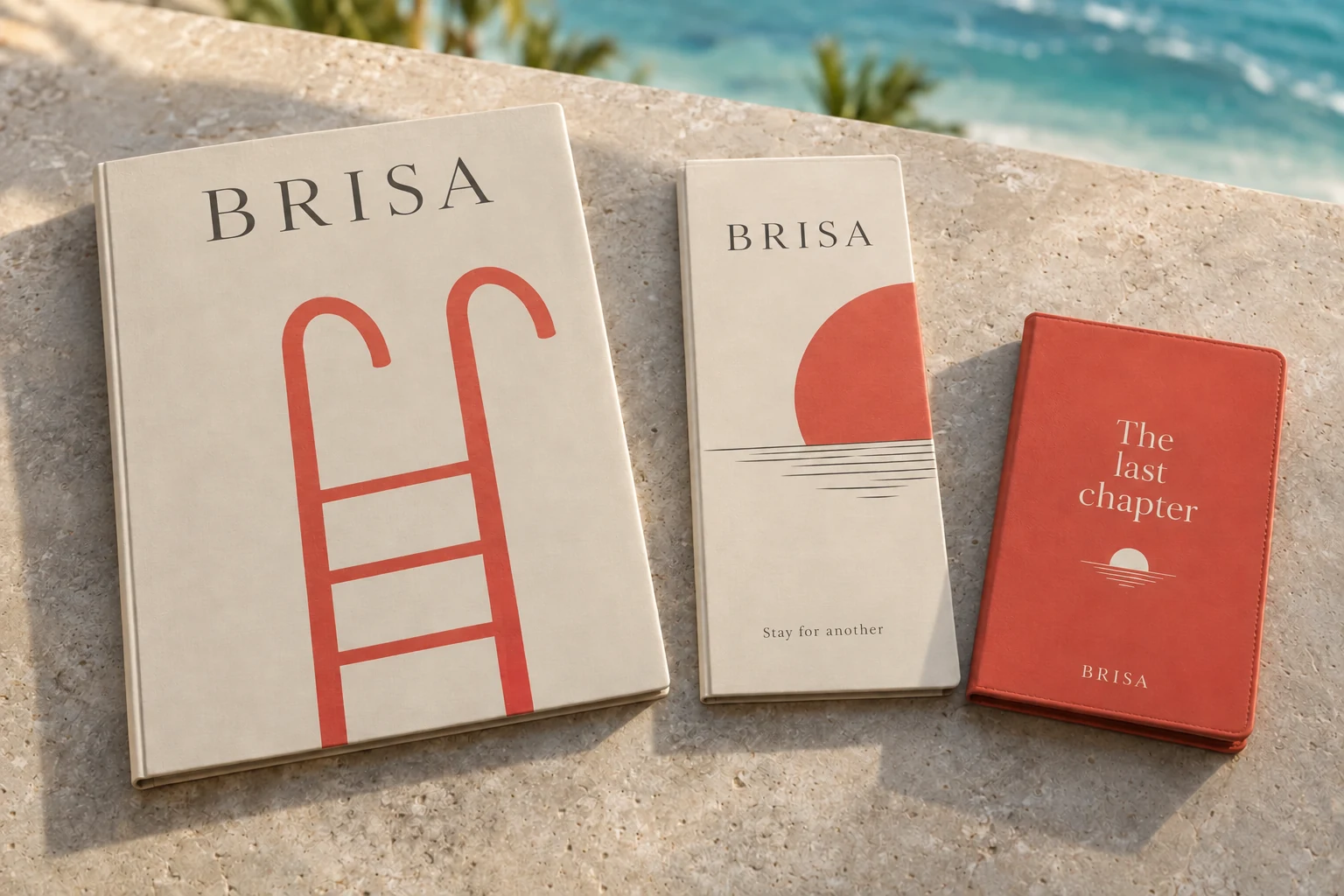
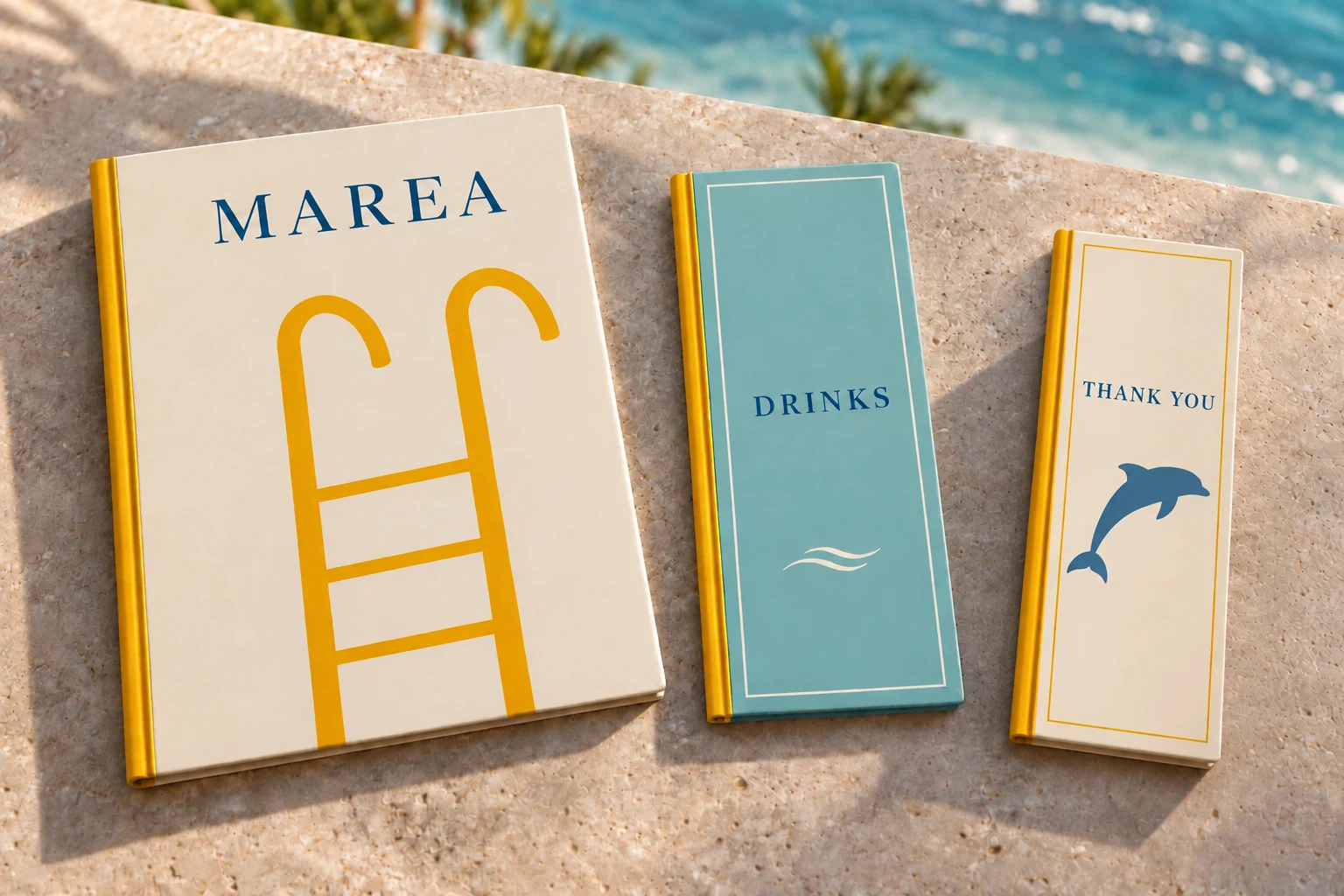
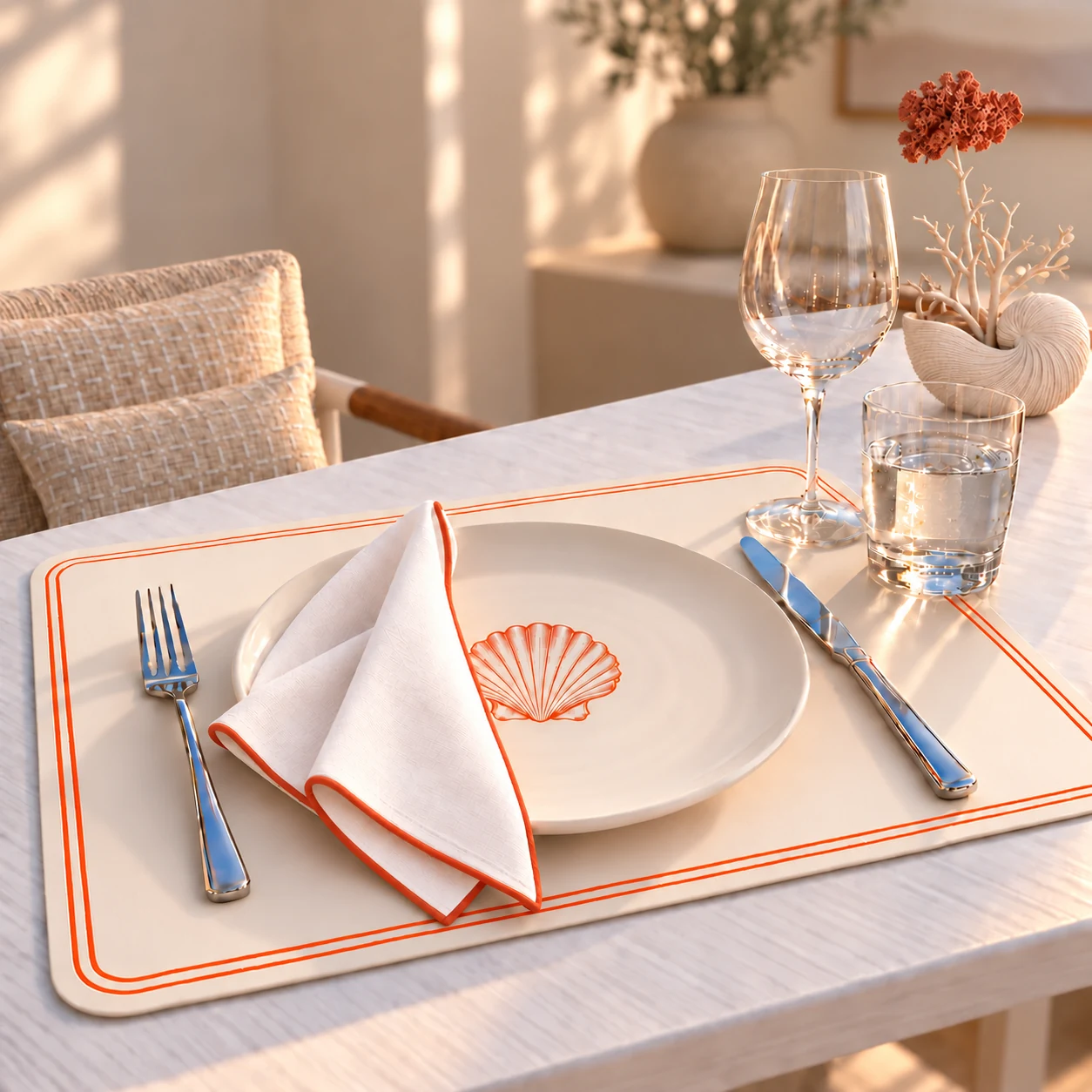
Decide what belongs to the family
Giving each venue character does not mean starting every decision from zero.
There may be a shared quality of fabric, a consistent approach to typography or a familiar level of finish. A discreet detail can connect the collection without appearing on every surface.
Think of a family resemblance. You notice it, but everyone still gets to choose their own clothes.
The useful question is: what should a guest recognise across the hotel, and what should feel like a new discovery?
Let service have a say
Some things are worth sharing for practical reasons.
A compatible menu-insert format might simplify printing. A common fabric specification could help the laundry team. Similar fastening systems may make maintenance easier.
Those choices still need to suit each venue. Outdoor exposure, spills, storage and the way staff move can change what a product needs to do. A shared specification is useful when it supports the work.
Count by venue, then by variation
A total menu quantity is only the beginning of the conversation.
How many are needed for breakfast, dinner and drinks? Which are used at the same time? Which covers share a construction, and which require a separate finish or print run?
The same applies to textiles and uniforms. Sizes, colours and artwork can affect minimum quantities and reorders. Putting those variations into one clear schedule helps everyone understand what is being quoted and approved.
Review the collection together
Look at the proposed pieces side by side, then consider how they would sit in each type of space.
Does each venue have a clear character? Is one element doing too much? Is there a connection that feels natural? And can each piece be identified, maintained and reordered without confusion?
A good collection leaves room for difference. Breakfast can be bright, the pool bar can loosen up, and dinner can dress for the occasion.
Different moods can still feel part of one family.