
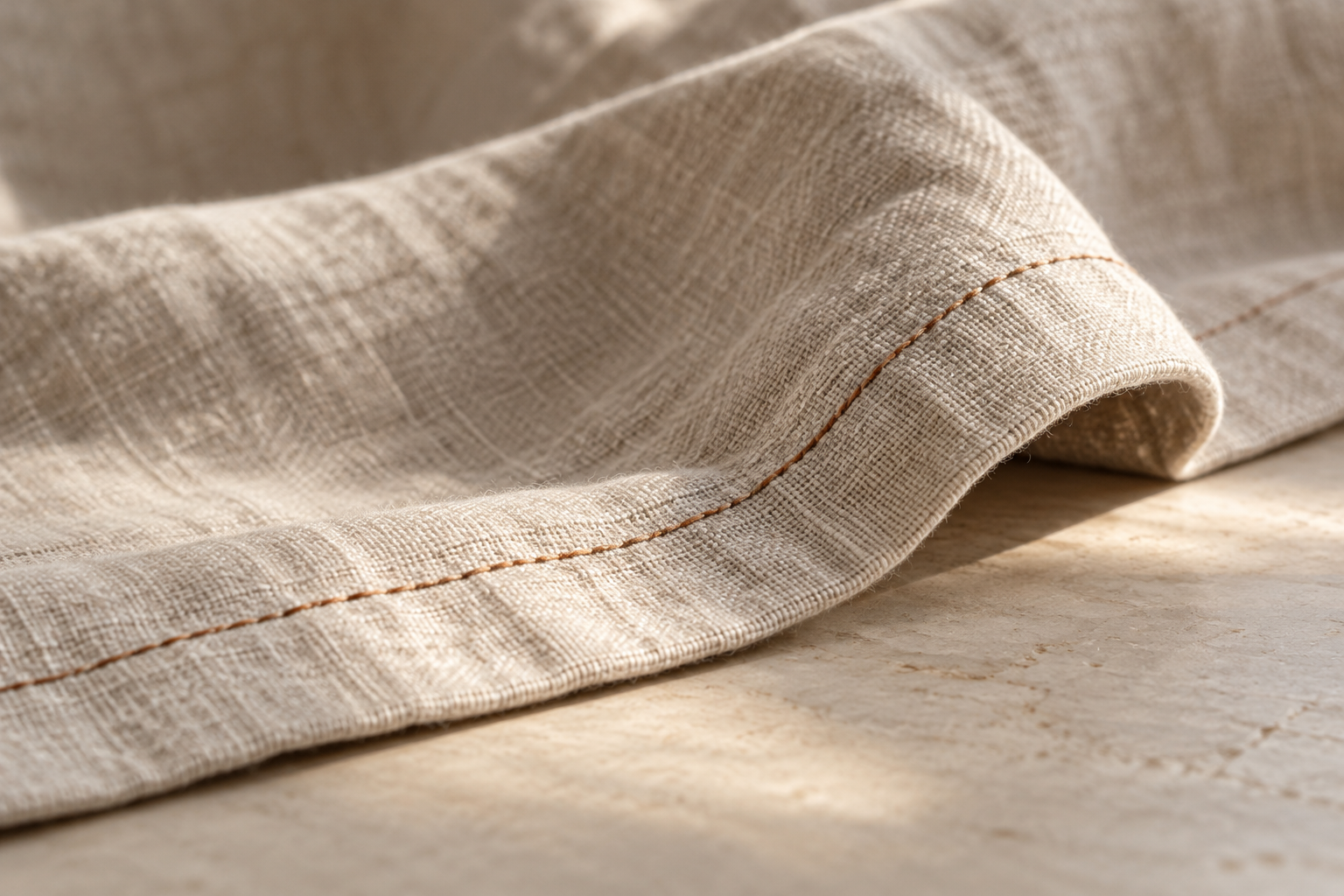
A pocket can do more than hold a pen. A coloured edge can do more than finish a seam. Sometimes, the smallest part of an object is the part that gives it character.
In a hotel or restaurant, those details have company. An apron moves past a table. A menu sits beside a plate. A bag leaves with a guest. Each belongs to a different moment, but they can still feel like parts of the same place.
The opportunity is to give them something in common.
Choose a detail with a reason
Start with the experience you want to create. Relaxed and generous? Crisp and graphic? Warm, tactile and a little unexpected?
That direction can become a contrast edge, a particular stripe, a rounded corner or a quiet embroidered mark. The detail should make sense on the object and in the setting.
A useful question is: if we removed the logo, what would still feel like us?
You do not need a signature on every surface. One well-chosen gesture can be enough to begin.
Let the idea change shape
A collection does not need to repeat the same pattern everywhere.
A colour might appear as piping on an apron, a narrow line on a plate and a small accent on a menu cover. The relationship is visible, but each piece keeps its own character.
Think of it as a conversation. The objects agree on the mood; they do not all need to say the same sentence.
This also makes room for practical differences. A woven textile and a glazed ceramic will not reproduce colour in exactly the same way. Review physical references together before deciding whether the family feels coherent.
Give the detail a job
A beautiful pocket still needs a comfortable opening. A menu cover needs to be pleasant to handle and suitable for the way the team cleans and updates it. An embroidered edge should sit where it adds character without getting in the way.
These questions belong in the design conversation from the beginning.
For an apron, consider what the wearer carries, how they move and where they naturally reach. For tabletop, think about handling, stacking and the relationship between food and decoration. For a guest object, consider whether someone will enjoy using it after the first impression.
The best details feel intentional because they support the experience.
Make the decision repeatable
Once a detail is agreed, give it a clear record: dimensions, placement, materials, colour reference and the approved artwork or sample.
“Like the last one” is a surprisingly complicated production instruction.
A shared reference helps the designer, maker and client discuss the same thing. It also makes future orders easier to assess. If a material or production method changes, the detail may need to be reviewed again.
A drawing communicates intention. A physical sample helps establish what will actually be made.
Know when to stop
A collection needs quiet pieces as well as expressive ones. If every surface becomes a statement, the small gestures lose their effect.
Give the strongest detail some space. Let a plain textile sit beside a patterned piece. Keep a useful object simple when its shape already does the work.
A recognisable collection can begin with a small idea, repeated thoughtfully across the moments that matter.
Tell us which details you want your guests to remember.