
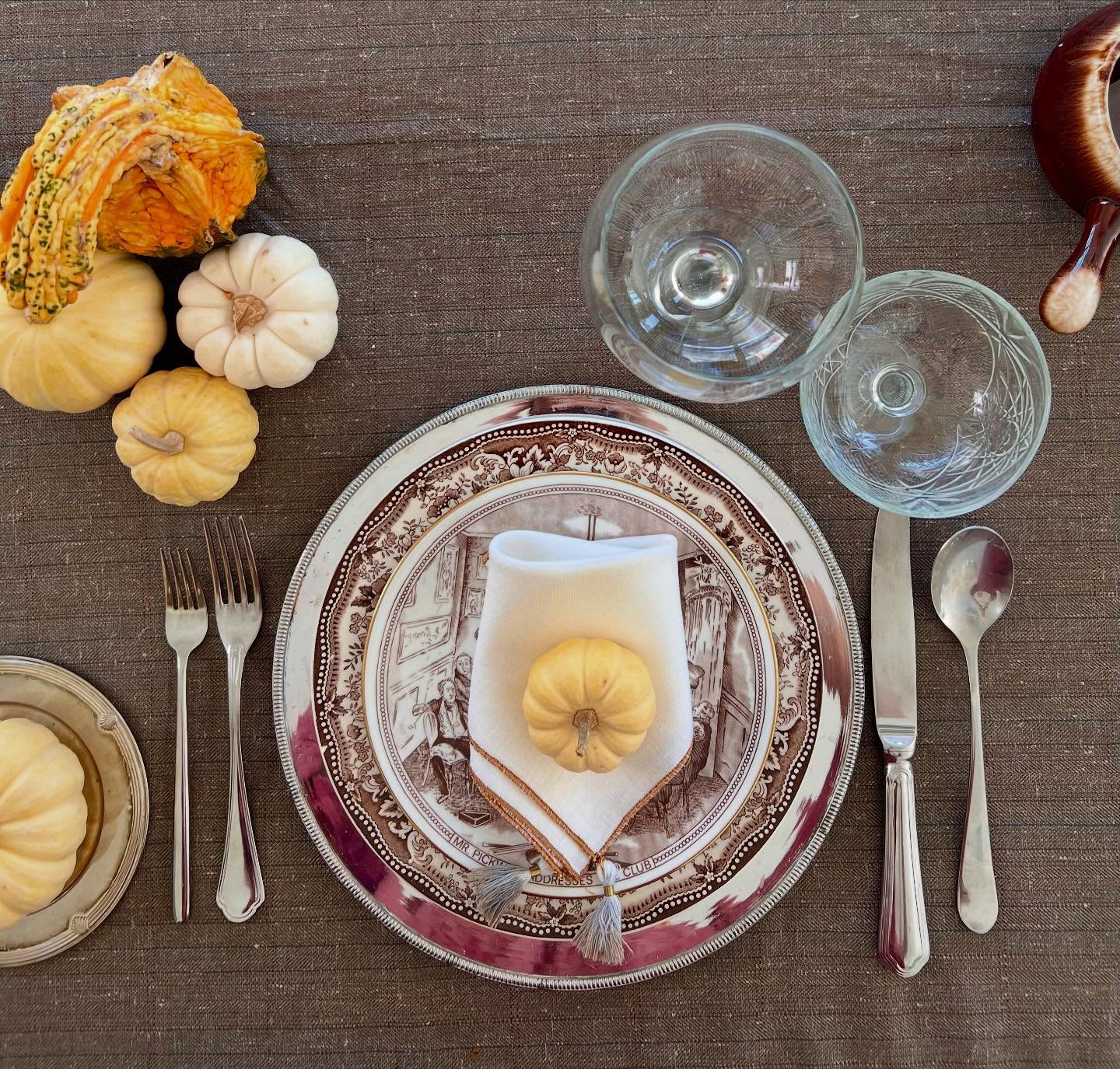
Custom tableware can give a restaurant a visual language of its own. It can also create delays, unnecessary costs and operational frustration when the brief begins with appearance and forgets how the pieces will actually live.
The most successful collections are not necessarily the most elaborate. They are the ones that make a clear idea usable: distinctive enough to belong to the venue, practical enough to survive service and coherent enough to grow over time.
Before requesting designs or quotations, several decisions need to be made.
Begin with service, not the logo
The first conversation should not be about where to place the brand mark. It should be about what happens at the table.
What type of food will be served? Which dishes are designed for sharing? How many courses will arrive? How quickly must tables turn? Which pieces remain in front of the guest and which are removed immediately? What does the service team need to carry at the same time?
The answers affect the size, depth, weight and quantity of every object.
A beautiful plate that is too heavy for the service team, too large for the table or difficult to stack is not a successful custom product. Good design begins with the relationship between food, guest and operation.
Bringing the chef, operations team and designer into this conversation early prevents aesthetic decisions from creating practical problems later.
Decide where customization will matter
Not every piece needs to be made from scratch.
A tabletop collection can combine existing products, customized finishes and completely bespoke objects. The important decision is where the investment in customization will have the greatest effect.
High-volume pieces may benefit from reliable existing forms that are easy to reorder. A custom color, illustration or finish can give them a stronger connection to the venue without introducing the cost and complexity of a new mold.
Bespoke development is most valuable for objects that create a recognizable moment: a serving piece presented at every table, a plate associated with a signature dish or an object that connects directly to the story of the restaurant.
Build the collection around the menu
A collection should be developed as a system rather than as a catalogue of attractive individual objects.
Begin with the service sequence and identify the minimum number of forms required. Consider how one piece might support several dishes before creating a different object for every item on the menu.
The food itself also affects the design. Sauces may require a rim or deeper profile. A highly textured surface may compete with delicate plating. Dark glazes can provide contrast but may show marks differently from lighter finishes. The temperature and composition of a dish can determine whether a material or form is appropriate.
Proportion must be tested on the actual tables. Oversized plates can reduce the space available for glassware, shared dishes and personal belongings. Tall objects may interrupt conversation, while an excess of small pieces can make the table feel crowded before the food arrives.
A complete table mock-up is one of the simplest and most valuable tests. It should include the table dimensions, chairs, linens, glassware, cutlery, menus, lighting and every object that remains during service.
Choose materials for the way they behave
Material selection should consider performance as carefully as appearance.
Ceramic pieces need to be evaluated for weight, porosity, chip resistance, stacking and consistency between production batches. Handmade processes and reactive glazes can create beautiful variations, but the acceptable range of those variations should be understood before production.
Glassware must work with the restaurant’s washing system and storage racks. Its balance, rim and weight affect the guest experience, while its strength and replacement availability affect daily operations.
Metal finishes can scratch, tarnish or change with repeated washing. Linens may shrink, fade or require specific laundering and pressing. Decorative applications on any material should be assessed for their expected wear and suitability for commercial use.
The supplier should also be able to confirm the relevant food-contact requirements for the market where the products will be used.
No material is perfect for every project. The right choice is the one whose appearance, maintenance and aging suit the concept and intensity of service.
Quantities are an operational calculation
Seat count alone is not enough to determine an order.
The required quantity depends on covers per service, table turns, washing capacity, storage, the number of dishes using each form and the amount of time a piece remains out of circulation.
Restaurants also need a working reserve for breakage, damage and unexpected demand. The appropriate reserve will vary according to the fragility of the product, frequency of use and time required to obtain replacements.
Manufacturing minimums can influence the calculation. Applying a custom decoration to an existing piece may require one minimum quantity, while producing a new ceramic form or custom glass may require another.
These constraints should be understood while the collection is still flexible—not after the design has been approved.
A sample is a decision-making tool
A digital image cannot confirm how a physical object will perform.
Screen color is not material color. An illustration may feel very different once adapted to a curved surface. Glazes move during firing, metallic finishes respond to light and the weight of an object cannot be judged from a rendering.
Samples should be reviewed under the lighting of the venue whenever possible, with the food they are intended to hold. Check the front and underside, the rim, the balance, the stacking, the scale of any artwork and the feeling of the object in the hand.
It is also important to define what constitutes an acceptable production variation. A handmade quality may be desirable, but the team and manufacturer still need a shared understanding of tolerances.
Once a sample is approved, every relevant detail should be documented: dimensions, material, finish, color references, artwork position and any approved variations. This becomes the reference for quality control and future reorders.
The unit price is not the complete cost
A useful quotation should make clear what is—and is not—included.
Depending on the project, additional costs may include molds, printing or decoration setup, technical artwork, samples, packaging, quality control, freight, customs duties, taxes and delivery to the final location.
International projects also require clear delivery terms and responsibilities. Who coordinates the factories? Who checks the finished pieces? Who consolidates products from different suppliers? Who handles customs? Who receives and inspects the order on site?
Comparing only unit prices can make one option appear less expensive when its total delivered cost is actually higher.
Work backward from the opening date
Production is only one part of the timeline.
A custom collection may involve concept development, product selection, technical drawings, quotations, prototypes, sample revisions, final approval, production, quality control, packing, freight and customs clearance.
Each stage depends on the previous one. A delay in approving artwork can affect production; a production delay can affect shipping; and an order that arrives too close to opening leaves little time to inspect or replace damaged pieces.
The opening date should therefore be worked backward through the entire process, with time allowed for decisions and contingencies—not only manufacturing.
Plan the second order before the first arrives
A collection is not finished when the initial shipment is delivered.
Before opening, the restaurant should know which pieces can be reordered, the minimum quantities, expected lead times and whether materials or colors may change between batches.
Product references, technical drawings, artwork files and approved samples should be kept together. If the collection uses several suppliers, one clear inventory record will make future replenishment easier.
Some highly customized objects may justify holding additional reserve stock. Others may need a more accessible alternative that can be introduced without disrupting the overall collection.
Continuity is part of the design.
Before requesting a quotation
A useful initial brief should include:
- The concept and visual identity of the venue.
- The menu or style of service.
- Seat count and expected covers.
- The pieces required and their intended uses.
- Estimated quantities.
- The opening date.
- Delivery location.
- Target budget.
- Reference images, colors or materials.
- Any operational requirements already identified.
The clearer the brief, the more reliable the creative proposal, quotation and production plan will be.
The real value of custom tableware is not novelty. It is the ability to create a collection that belongs unmistakably to the venue, performs every day and can be maintained without losing its identity.