
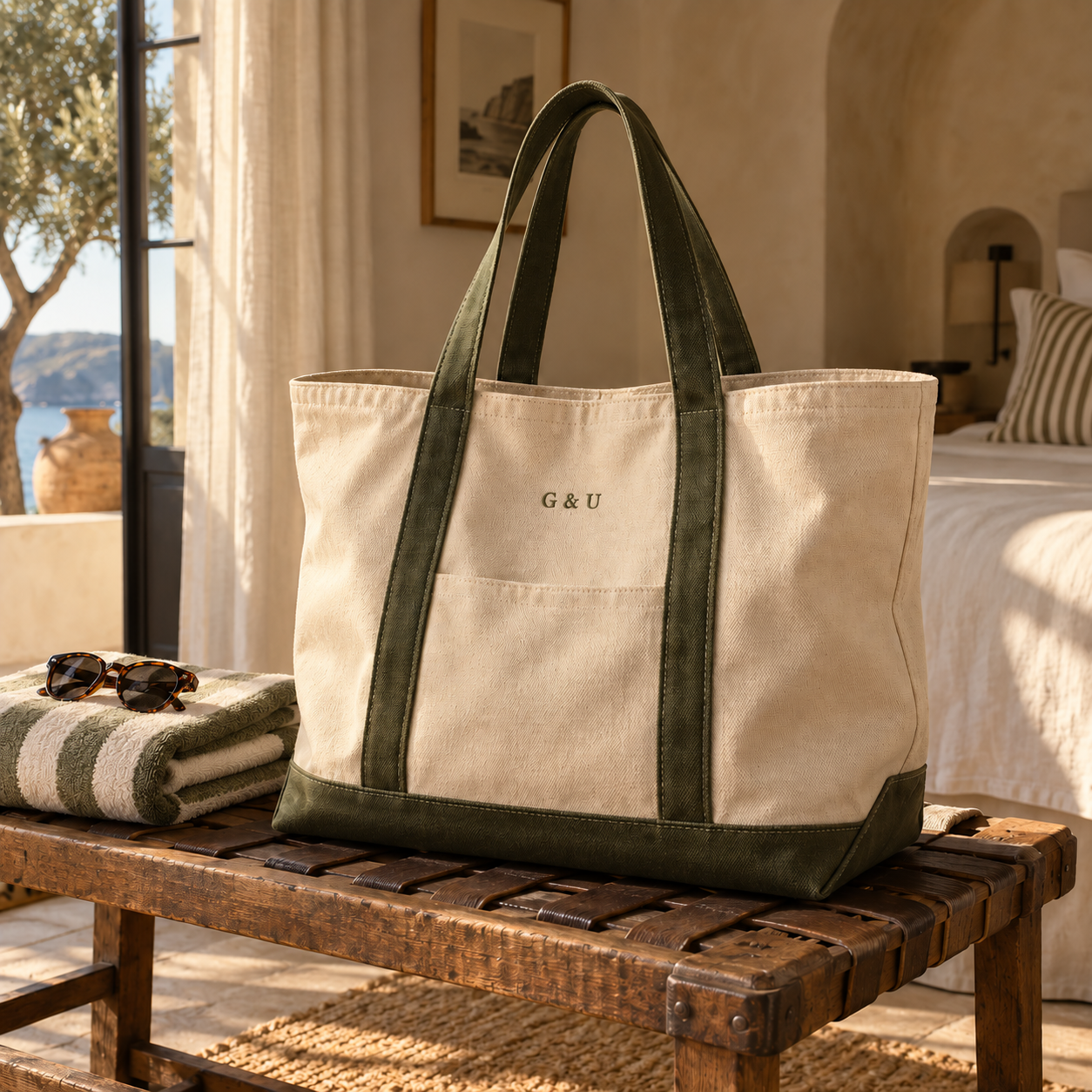
A hotel is experienced through objects long before it is evaluated as a design project.
The key card placed in a guest’s hand, the glass beside the bed, the fan offered on a warm afternoon, the pool towel and the bag that carries their belongings all participate in the stay.
A fan is a particularly good example. In a warm-weather property, it responds to an immediate need while moving naturally between the room, terrace, restaurant, pool and beach. Its shape, material, color and movement can express the character of the hotel without relying on a large logo.
When it is well designed and well made, the guest may continue to use it throughout the stay and take it home afterward. A simple gesture of comfort becomes a useful object, a visible expression of the property and a lasting reminder of the experience.
This is what thoughtful hotel merchandise can achieve.
Some objects are used for seconds and others for days, but together they create a quiet layer of evidence: this place has considered how I move through it.
When these objects are selected independently, the experience can feel generic even inside a remarkable interior. When they are developed as part of the same idea, they make the identity of the hotel tangible.
Begin with the guest’s route
The most useful starting point is not a product catalogue. It is the journey of the guest.
That journey begins before arrival and continues through reception, the room, breakfast, the pool, the spa, the beach, the city and departure. Every transition creates a need, and some of those needs can be answered by an object.
A tote may make it easier to move between the room and the pool. A reusable bottle can accompany excursions. A notebook may connect naturally to an urban hotel designed for creative travelers.
The objective is not to place merchandise at every stage. It is to identify the moments where an object can remove friction, add comfort or give physical form to the character of the property.
Usefulness creates attachment
A memorable hospitality object must first earn its place.
A product may be visually attractive, but if it is uncomfortable, fragile or unnecessary, the relationship with the guest ends quickly. Utility gives design a reason to exist beyond the initial impression.
This does not mean that every object needs to be purely functional. Pleasure is also a form of usefulness. The weight of a ceramic cup, the texture of a towel or the way a bag sits on the shoulder can make an ordinary action feel considered.
The strongest hotel merchandise is something a guest would choose even if the logo were removed. Its connection to the property then gives it an additional emotional value.
Give every object a clear role
Hotel goods generally perform one of three roles:
- Operational objects are used repeatedly within the property. Trays, menu covers, room accessories, pool towels and service textiles need to withstand frequent handling, cleaning and replacement.
- Courtesy objects are provided as part of the stay or offered as a gesture. Their quantities, cost per occupied room, packaging and ease of distribution need to be carefully controlled.
- Retail objects are products guests choose to purchase. They must justify their price through design, quality and usefulness while also working as part of a commercial collection.
A single product may move between these categories. A beach bag might be available in the room for use during the stay and offered for purchase at departure. A ceramic cup used at breakfast may also be sold in the hotel shop.
That crossover can be powerful because the guest has already experienced the object before deciding whether to take it home.
Create a sense of place without creating a souvenir
A hotel object should feel specific to its surroundings without relying on predictable symbols.
A coastal property does not need to place seashells on every product. An urban hotel does not need a literal drawing of its skyline. The connection to place can be expressed more subtly through materials, color, craft, scale and use.
Climate may influence the weight of a textile or the need for shade. Local habits can inspire the form of a serving object. Architecture may suggest a pattern, proportion or construction detail. A collaboration with a regional maker can introduce a material tradition without turning it into decoration.
The aim is not to illustrate the destination. It is to create objects that could only have emerged from this particular experience.
Branded does not mean covered in logos
A logo is one way to create recognition, but it is rarely the only—or most interesting—one.
Identity can be carried through a distinctive color combination, an embroidered edge, the weave of a fabric, a recurring illustration, a custom silhouette or the relationship between materials.
The level of branding should also respond to how the object will be used. A small item intended as a keepsake may support a more visible mark. A bag, garment or textile designed for regular use may benefit from a quieter approach.
Subtle branding often gives an object a longer life. Guests are more likely to use something that feels considered in its own right rather than something that resembles promotional merchandise.
Once it leaves the hotel, the object becomes a reminder of the stay. Recognition continues, but through use rather than advertising.
Build a collection with hierarchy
A successful merchandise collection does not need a large number of products.
Too many items can make the identity feel unfocused and create unnecessary complexity in production, storage and retail display. A smaller collection allows each piece to have a clear purpose.
It can be useful to establish a hierarchy:
- A hero object that expresses the property most clearly and creates desire.
- Useful everyday pieces that guests can easily incorporate into their lives.
- Accessible objects at a lower price point or suitable for gifting.
- Seasonal or limited pieces that allow the collection to evolve without changing its foundations.
The products should relate to one another without becoming identical. Repeating one color, material or graphic gesture can create a family while allowing each object to respond to its own function.
Design and operations need one conversation
Every hospitality object carries operational questions.
How will it be cleaned? Where will it be stored? How frequently will it be handled? Will it be exposed to sun, water, humidity or heat? Can individual pieces be replaced? What happens when the first production run is exhausted?
Textiles should be tested for laundering, shrinkage, fading and color transfer. Bags and garments need appropriate construction, sizing and load capacity. Drinkware and ceramics require suitable materials and finishes for their intended use.
Minimum order quantities, production times, packaging, freight and replenishment should be understood before the final collection is approved.
It is also important to involve the departments that will manage the objects. Housekeeping, food and beverage, retail and purchasing may each identify practical requirements that are invisible in a design presentation.
A coordinated process prevents a familiar problem: every department purchasing correctly for its own needs while the property as a whole loses coherence.
Retail is part of the experience
If the products are offered for sale, the retail moment needs the same attention as the objects themselves.
Where will guests discover the collection? Will it appear in a traditional shop, in the room, at reception or through an online store? Can guests understand which items are available without the space feeling overly commercial?
Pricing should account for the complete cost of the product, including development, packaging, transport, duties, storage and retail margin. The number of sizes, colors and variations should remain manageable.
Presentation matters too. A strong object can lose value when displayed without context, while a short explanation of its material, maker or connection to the property can make the purchase more meaningful.
The retail experience should feel like a natural continuation of the hotel—not a separate souvenir shop placed beside it.
The test of a good hospitality object
Before developing or purchasing an item, ask:
- Does it answer a real guest need or create genuine pleasure?
- Would it still be desirable without the logo?
- Does it feel connected to this particular property?
- Can it withstand the way it will actually be used?
- Can it be stored, maintained and reordered realistically?
- Is it easy for a guest to carry home?
- Will it still feel relevant after the stay?
The strongest objects can answer these questions without needing a complicated explanation.
A piece of the place
The best hotel objects do not compete with the architecture. They bring it closer.
They allow the guest to touch the identity, use it and sometimes carry a small part of it away. A fan, towel, bag, cup or notebook becomes meaningful because it was present during a particular experience.
That is why hotel goods should not be treated as a final layer of decoration or a collection of promotional products. They are where the larger idea of the property becomes practical, intimate and memorable.
A guest may leave the room behind. The right object allows a piece of the place to continue with them.