
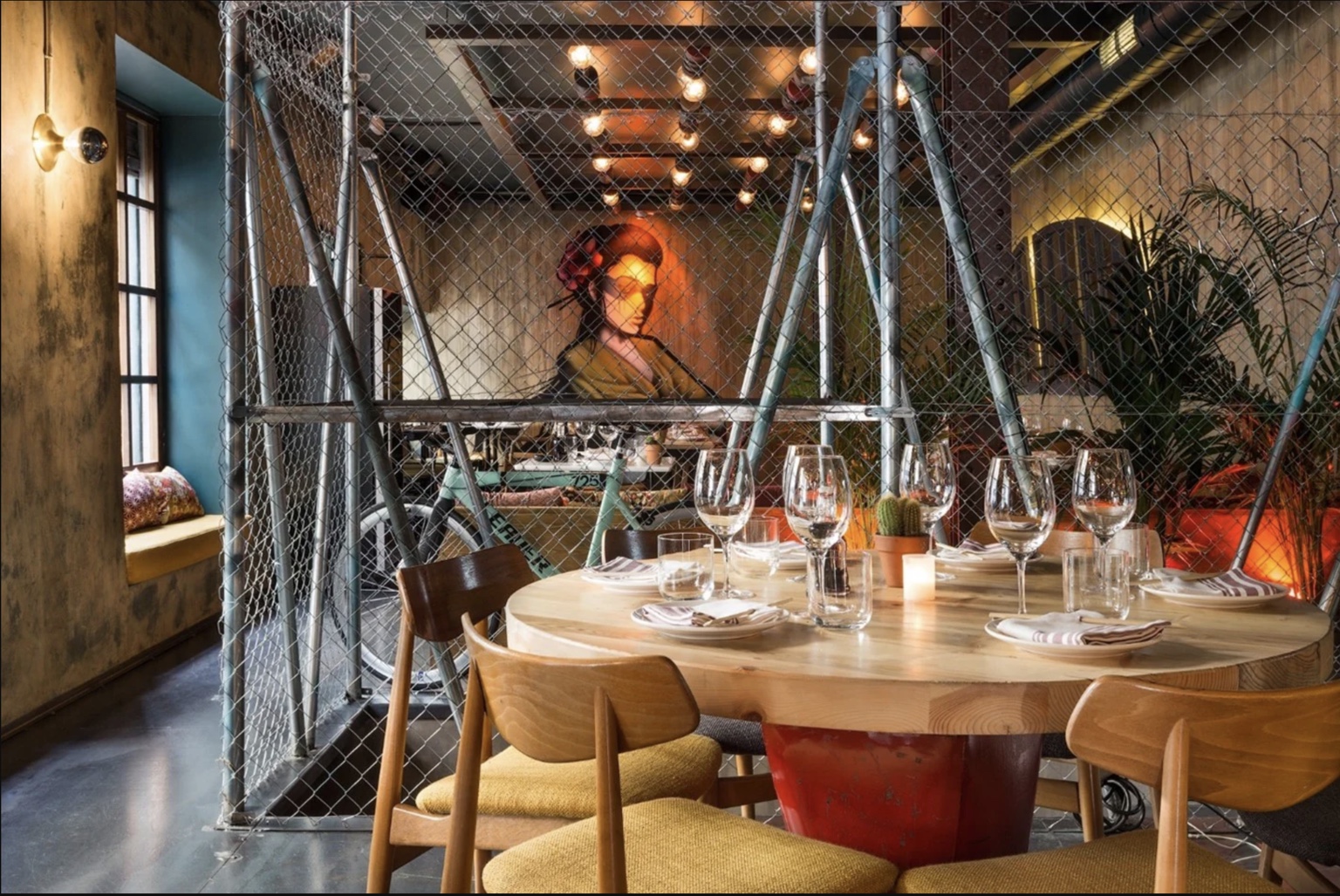
For the guest, an interior is not a photograph. It is a sequence of encounters: the weight of a door, the temperature of the light, the sound of the room—and then the plate placed directly in front of them.
Yet the tabletop is still often treated as the final shopping list. The space is designed, the furniture is ordered and the identity is approved. Only then does somebody ask which plates, glasses or linens should go on the table.
By that point, many of the most interesting decisions have already been separated from one another.
A stronger hospitality experience begins when the table is considered from the start—not as decoration, but as part of the interior, the service and the identity of the restaurant.
The closest layer of the interior
A guest may admire a ceiling or a bar from across the room. The objects on the table are different. They enter the guest’s personal space. They are touched, lifted, moved and used repeatedly throughout the meal.
This proximity gives them unusual influence.
The weight of a glass can make a restaurant feel either delicate or substantial. The edge of a plate can suggest formality or ease. A linen napkin introduces softness and sound absorption, while the finish of a piece of cutlery can reinforce—or quietly contradict—the atmosphere of the room.
The tabletop is therefore not a smaller version of the interior. It is its most intimate layer.
Coordination does not mean matching
Designing the table as part of the interior does not mean repeating the same colors, patterns and logos on every object.
A green interior does not require green plates. A graphic identity does not need to appear on every napkin. When the connection becomes too literal, a restaurant can quickly feel themed rather than considered.
A more sophisticated relationship is built through shared qualities.
A raw, energetic space might call for generous proportions, irregular finishes and objects with a visible human touch. A quiet, architectural restaurant may benefit from controlled repetition, finer silhouettes and a more restrained palette. Contrast can also create cohesion: a hard, minimal room may need tableware that feels tactile and warm.
The useful question is not simply, “Does this plate match the room?”
It is: “Does this object belong to the same story?”
Begin with the menu and the service
Tableware should never be selected without understanding how the restaurant operates.
Before choosing a collection, it is important to know how the food will be served. Are dishes individual or designed for sharing? How many elements need to remain on the table? Will guests receive several courses? Are sauces poured tableside? Does the service need to be fast and flexible, or more ceremonial?
These decisions affect the size, depth and weight of every piece.
A beautiful oversized plate may leave no room for glassware on a small table. A sculptural bowl may be difficult for staff to carry in multiples. Too many different forms can complicate storage and slow down service. Even the height of a centerpiece matters if it interrupts conversation or blocks the view across the room.
The best way to identify these problems is to build a complete table setting before placing the final order. It should include the actual table dimensions, chairs, lighting, menu, glassware, cutlery and every object that remains during service.
The design team, kitchen and front-of-house staff should all be able to test it. Each will notice something different.
Materials are operational decisions
The appearance of a material is only the beginning. In hospitality, every surface also has to perform.
Ceramic pieces should be evaluated for chip resistance, porosity, stackability and consistency between production batches. Reactive or handmade glazes can create beautiful variation, but that variation needs to be understood and accepted as part of the design.
Glassware must be considered in relation to washing systems, storage racks, replacement availability and the way staff handle it during service. A very fine glass may be appropriate for one concept and completely impractical for another.
Linens introduce their own questions: shrinkage, staining, pressing, laundering and how the fabric changes after repeated use. Cutlery needs to feel right in the hand while also resisting scratches and maintaining its finish.
There is no universally perfect material. The right choice is the one whose appearance, behavior and maintenance suit the particular restaurant.
Plan for replacement from the beginning
Breakage and wear are part of restaurant life. They should be included in the design process rather than treated as unexpected problems.
Before confirming a collection, the team should understand minimum order quantities, production lead times and whether individual pieces can be reordered. Custom colors and forms may create a stronger identity, but they also require a clear replacement strategy.
Storage matters too. A collection that occupies too much space, cannot be stacked safely or requires several incompatible racks may create daily operational difficulties.
The most successful tabletop is not simply attractive on opening night. It continues to work months and years later.
Choose the right level of customization
Not every project needs an entirely bespoke collection.
There are three useful levels to consider:
- Curated: selecting existing products from different makers and combining them into a distinctive, coherent collection.
- Customized: adapting existing pieces through color, glazing, illustration, engraving, embroidery or branded details.
- Bespoke: developing original forms, materials or objects specifically for the project.
The right level depends on the concept, budget, quantities, timing and operational needs. Often, the strongest solution combines all three: reliable existing pieces for high-volume service, customized elements that carry the identity and a small number of bespoke objects that create memorable moments.
Customization is most valuable when it supports the experience—not when it exists only to display a logo.
Where identity becomes memory
Hospitality is remembered through fragments.
Guests may not recall the exact floor finish or the name of a particular chair, but they remember how the place made them feel. They remember the glass they held, the bowl placed at the center of the table, the texture of the napkin and the small objects that accompanied the meal.
These details are where an abstract identity becomes physical.
That is why the table deserves the same creative direction as the room around it. It is not the final accessory. It is the point where space, food, service and identity meet—and where the design becomes an experience.